








Affordable Health Tips for People Trying to Lower Stress Levels
 August 20, 2026

Finding affordable health tips for people trying to lower their stress levels felt impossible when my own burnout hit hard last spring. Every wellness influencer was pushing hundred-dollar massage guns, cold plunge tubs, and fancy adaptogen powders. My bank account panicked just looking at them. True nervous system relief should never require a luxury budget, so I stripped everything back to basics and rebuilt my sanity.
1. Morning Sunlight Exposure
Step outside within thirty minutes of waking up to reset your internal clock. Direct light hitting your retinas signals to your brain that it is time to shut off melatonin and regulate daytime cortisol production.
You do not need an expensive therapy lamp when the sun is free. Stand on your porch or balcony for ten minutes without sunglasses, sipping a glass of tap water. I noticed a massive drop in my afternoon jitters within a week of doing this circadian alignment routine consistently.
2. The Physiological Sigh Breath Pattern
Fast nervous system regulation does not cost a penny, and this two-step breathing trick proves it. Take two quick sniffs through your nose, then follow with a long, slow exhale through your mouth.
Repeating this pattern three times triggers your parasympathetic system to pop open collapsed alveoli in your lungs and dump carbon dioxide fast. Stanford neurobiologist Andrew Huberman popularized this method because it instantly slows a racing heart. I use this autonomic down-regulation tool whenever my inbox explodes before lunch.
3. Magnesium-Rich Epsom Salt Foot Soaks
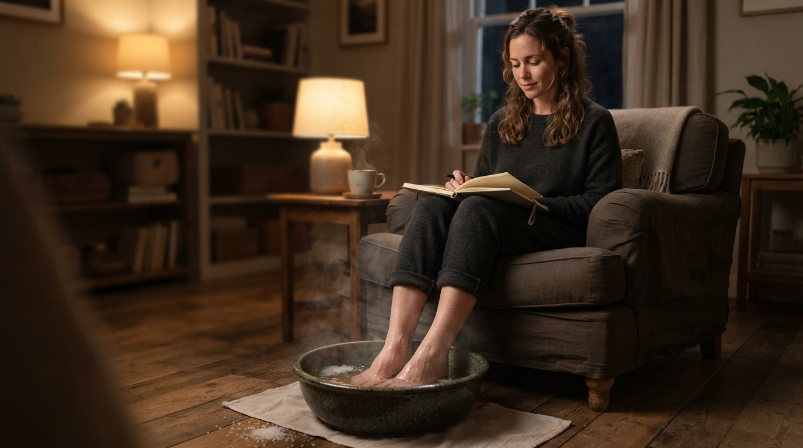
Skip the high-end spa passes and buy a four-pound bag of plain Epsom salt from your local pharmacy for under five dollars. Soaking your tired feet in a warm basin loaded with magnesium sulfate eases physical tension straight through your peripheral nerves.
Dissolve two cups of crystals in a plastic washbasin while you read or listen to soft music on Spotify. Magnesium relaxes tight muscles and encourages the release of calming neurotransmitters throughout the entire body. Gathering simple ingredients creates one of the best affordable health tips for people trying to lower their stress levels without buying luxury wellness gadgets.
4. Non-Sleep Deep Rest Protocols
Free audio tracks on YouTube or the Insight Timer app can restore your drained mental energy in twenty minutes flat. Non-sleep deep rest guides you through conscious body awareness while slowing brain waves down into alpha and theta states.
Lie flat on your living room rug with a regular bed pillow beneath your knees. Your body enters a restorative state similar to deep slow-wave sleep without actually losing consciousness. Practicing guided body scanning mid-afternoon completely eliminated my need for a third cup of jittery coffee.
5. Chamomile and Peppermint Herbal Infusions
Grocery store herbal tea bags offer serious medicinal value at roughly twenty cents per mug. Chamomile contains apigenin, an antioxidant that binds to specific receptors in your brain to decrease anxiety and promote calm.
Add a bag of pure peppermint to soothe the gastrointestinal tightness that often accompanies severe mental strain. Steep both bags together in boiling water for eight full minutes with a plate covering your mug to trap the volatile oils. This simple herbal extraction turns an ordinary evening drink into a grounding ritual.
6. Daily Nature Walks: Affordable Health Tips for People Trying to Lower Their Stress Levels
Leaving your phone behind for a twenty-minute stroll under tree canopies naturally lowers your salivary cortisol. Plant phytoncides stimulate immune function while natural greenery reduces activity in the amygdala, your brain’s fear center.
Head to a city park, a quiet neighborhood street, or a community botanical garden. Look at the distant horizon to encourage panoramic vision, which biologically switches off your fight-or-flight response. Testing out these affordable health tips for people trying to lower their stress levels outdoors made my chronic shoulder knots vanish.
7. The Evening Brain Dump in a Cheap Notebook
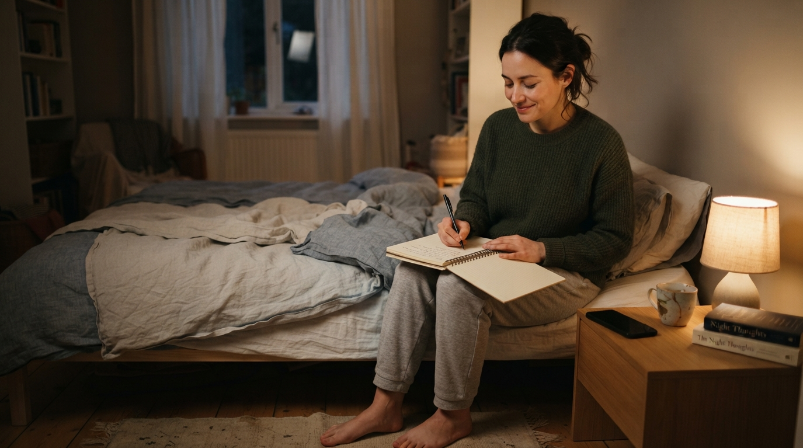
Mental clutter keeps your nervous system on high alert because your working memory hates unresolved open loops. Grabbing a simple ninety-nine-cent spiral notebook and scribbling down every single anxious thought empties the cognitive tank before bed.
Write without filtering your grammar, your spelling, or your tone for ten straight minutes. Once your worries sit on paper, draw a line through tasks you cannot control tonight. This expressive writing practice clears mental real estate so your thoughts do not spin when your head hits the pillow.
8. Cold Water Facial Splashes
Ice-cold tap water running over your face activates the mammalian dive reflex within seconds. This reflex immediately forces your vagus nerve to slow your pulse and dial down acute sensory overload.
Fill your bathroom sink with cool water, toss in a couple of ice cubes from the freezer, and hold your breath while submerging your face for fifteen seconds. Repeating this twice resets your biological alarm bells when a high-pressure crisis strikes. It remains among the most effective affordable health tips for people trying to lower their stress levels during chaotic afternoons.
9. Progressive Muscle Relaxation in Bed
Physical tension often hides in your jaw, shoulders, and lower back without you even realizing it. Progressive muscle relaxation trains your brain to recognize the contrast between extreme contraction and total somatic release.
Squeeze your toes tightly for five seconds, then release them completely and notice the warm rush of blood. Work your way up through your calves, thighs, stomach, and face, holding each group before letting go. Using systematic muscle tensing right before falling asleep knocks out racing thoughts faster than any sleep supplement I ever bought.
10. Digital Notification Blackouts
Constant notification pings spike adrenaline by keeping your brain in a perpetual state of hypervigilance. Silence non-essential app badges and turn on Do Not Disturb mode starting at eight every evening.
Move social media apps off your primary home screen so you do not open them out of subconscious muscle memory. Set your phone to display in grayscale to make scrolling look boring and unstimulating. Enforcing this digital boundary gives your exhausted mind hours of uninterrupted quiet every single evening.
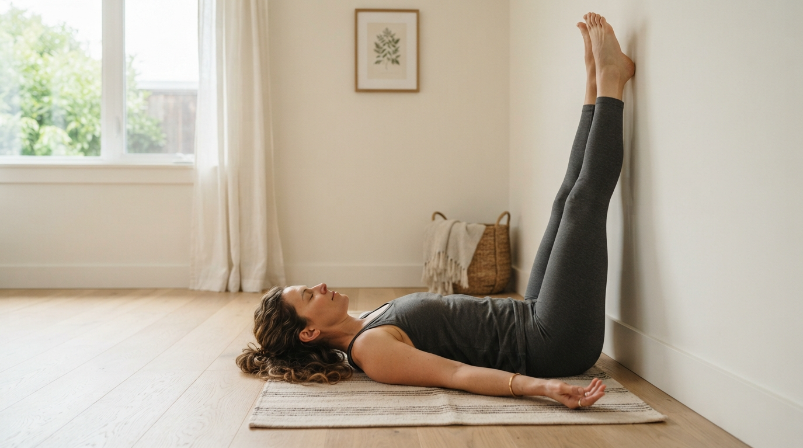
11. Legs-Up-the-Wall Yoga Pose
Known classically as Viparita Karani, this zero-cost restorative pose requires nothing more than an empty wall and a comfortable floor. Inverting your lower body encourages venous drainage back toward your heart, which signals your baroreceptors to reduce blood pressure.
Scoot your hips close to baseboards, extend your legs straight up against the drywall, and place one hand on your belly for fifteen minutes. Soften your breathing as gravity gently drains stagnant fluid from your ankles. Exploring accessible, affordable health tips for people trying to lower their stress levels like this posture saves you money on expensive restorative fitness classes.
12. Targeted Acupressure on the Yin Tang Point
Ancient bodywork traditions offer fast relief that you can apply with your own fingers anywhere, anytime. The Yin Tang point sits directly between your eyebrows, right where many people hold furrowed tension during difficult conversations.
Apply gentle, circular pressure with your middle finger while closing your eyes for two full minutes. This specific stimulation calms the restless spirit and reduces forehead muscle strain. Incorporating acupressure stimulation gives you a silent, discreet way to defuse high tension without anyone at work noticing.
Frequently Asked Questions
How quickly do these cheap stress relief habits start working?
Physical techniques like the physiological sigh and cold face splashes work in less than two minutes by altering your heart rate and vagal tone. Habitual practices like morning sunlight and evening journaling show compounding mental benefits after four to seven consecutive days of steady practice.
Can low cost wellness habits really replace expensive therapy or medications?
Lifestyle habits support and stabilize your nervous system, but they do not replace clinical treatment for chronic psychiatric conditions or severe clinical depression. Think of these habits as a baseline foundation that enhances emotional resilience. Always consult a licensed therapist or physician for specialized mental health diagnoses and prescriptions.
What are the best affordable health tips for people trying to lower their stress levels at work?
Focus on discreet methods that require zero equipment during the workday. Use the two-step physiological sigh during tense meetings, apply gentle acupressure between your eyebrows, or walk outside for five minutes at lunch. These micro-breaks stop nervous system overload before it spirals out of control.
How much time do I need each day to see real stress reduction?
You only need fifteen to twenty cumulative minutes across your whole day. Splitting that time into small two-minute breathing breaks and a ten-minute morning walk creates significant nervous system relief. Consistency matters far more than spending hours doing complicated routines you will eventually abandon.
Do I need any special equipment to get started with home relaxation?
You already own everything required. A basic bed pillow, tap water, a regular notebook, and the morning sun provide all the tools necessary for total somatic recovery. Forget the trendy commercial wellness gadgets and stick to simple biological mechanisms that cost absolutely nothing.
Conclusion
Real stress management is about giving your body permission to downshift using tools nature already gave you. Pick one or two of these zero-dollar habits to test over the next few days and see how your body responds. Which free relaxation practice are you going to try first tonight?