










Easy Health Tips for People Who Sit at a Desk All Day
 August 21, 2026
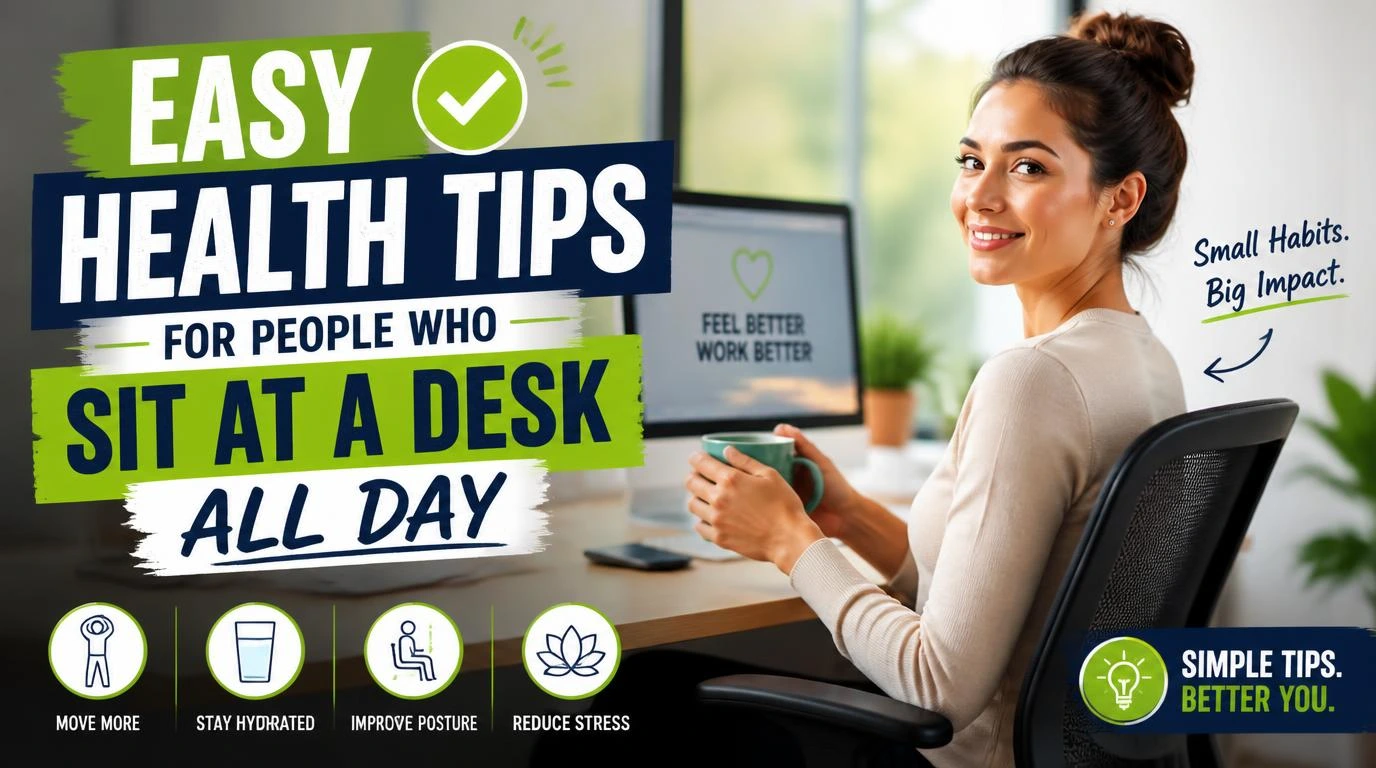
Finding easy health tips for people who sit at a desk all day saved my aching back and crushed my chronic 3 PM fatigue. Staring at twin monitors for eight hours straight leaves your shoulders glued to your ears and your hips completely locked up. You do not need to quit your office job or buy a treadmill desk to feel human again before dinner.
1. Adjust Your Monitor to Eye Level
Raise your primary computer screen so the top third sits directly at natural eye level. Looking down at a laptop for eight hours puts immense mechanical strain on your cervical spine. A sturdy monitor riser or two thick hardcover books will fix this posture trap immediately.
Keep your display roughly an arm’s length away from your nose. This simple setup keeps your skull balanced directly over your shoulders instead of craning forward. Adjusting your monitor height eliminates the subconscious slump that triggers daily tension headaches before noon.
2. Set Hourly Movement Alarms
Schedule a gentle vibrating alarm on your watch or phone every fifty minutes. Sitting motionless causes blood to pool in your lower legs and slows down muscle glucose uptake. Breaking that physical trance wakes up your metabolism and clears mental fog.
Stand up and walk around your room for two full minutes whenever the timer chimes. I use a free Pomodoro timer app on my desktop to enforce these micro-breaks without ruining my workflow. Pacing while thinking about an email keeps your cardiovascular system engaged throughout the entire afternoon.
3. Place an Angled Cushion Under Your Feet
Place an angled foam pad or wooden block directly underneath your feet while seated. Dangling feet or tucking your heels under the chair cuts off circulation and strains the lower back. Resting your soles firmly on an angled platform stabilizes your pelvis and keeps your posture intact.
Using an ergonomic footrest like the ErgoFoam cushion lets your knees rest at a natural ninety-degree angle. This small shift serves as one of the best easy health tips for people who sit at a desk all day because it removes direct pressure from your hamstrings. You will notice less lower back tightness right away.
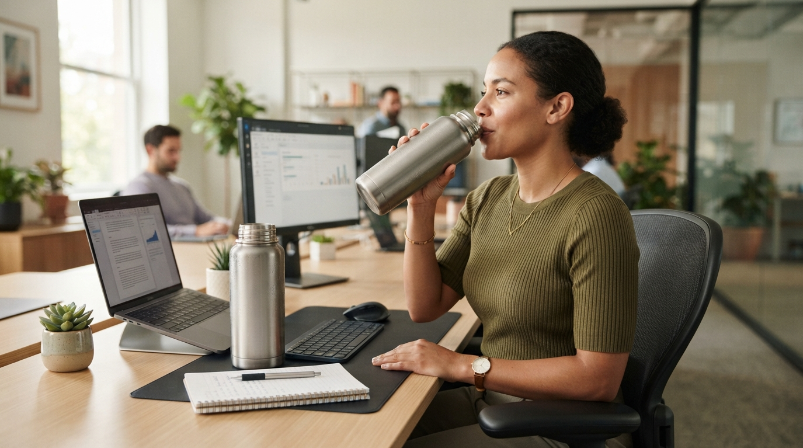
4. Keep an Insulated Water Bottle on Hand
Keep a large reusable stainless steel water bottle right next to your keyboard. Dehydration sneaks up on desk workers and often disguises itself as mid-morning sluggishness or false hunger pangs. Drinking cold water consistently keeps your cognitive processing sharp and prevents dry throat during long meetings.
Aim to finish a thirty-ounce container twice between morning check-in and signing off for the evening. Carrying a designated insulated tumbler also forces you to walk to the office kitchen for regular refills. Those frequent trips give you automatic walking breaks without needing a structured workout routine.
5. Master the Seated Hip Stretch
Tight hip flexors are the quiet culprit behind most office-related lower back pain. Sitting keeps your hip joints in constant flexion, which shortens the psoas muscles over time. You can loosen these stubborn muscles right in your desk chair without getting onto the carpet.
Cross your right ankle over your left knee and gently hinge forward from the waist with a flat spine. Hold this seated stretch for thirty seconds on each leg to restore basic mobility to stiff glutes and hips. Doing this twice a day keeps your pelvis aligned and relieves that dull afternoon ache.
6. Swap to an Active Cushion
Ditch static sitting for part of your shift by introducing an active seating cushion or balance stool. Conventional office chairs encourage passive slouching because the backrest supports all of your torso weight. Unstable seating makes your deep abdominal muscles fire subtly to keep you upright.
Place an inflatable wobble cushion on top of your existing office chair for an hour each morning. This subtle balance motion prevents stiffness and strengthens your core stabilizers while you type away at spreadsheets. Switch back to your standard seat whenever your muscles feel fatigued so you do not sacrifice posture.
7. Easy Health Tips for People Who Sit at a Desk All Day Begin with Eye Rest
Protect your vision by practicing the classic twenty-twenty-twenty optical rule throughout the workday. Staring at bright digital pixels reduces your natural blink rate by almost fifty percent. That dry environment leads to red, irritated eyes and chronic evening exhaustion.
Every twenty minutes, glance at an object at least twenty feet away for twenty full seconds. Look out a window or focus on a poster across the hallway to let your ciliary muscles relax. Applying targeted eye strain prevention methods reduces digital fatigue dramatically before your final project review of the day.
8. Perform Desk Push-Ups Between Calls
Build upper body activation into your routine by doing quick wall or desk push-ups between assignments. Sedentary work deactivates your pectoral muscles and weakens the upper back over months of leaning over keyboards. Brief bursts of bodyweight resistance kickstart your circulation and stimulate dormant muscles.
Place your palms shoulder-width apart against the edge of a sturdy desk and perform ten controlled repetitions. Constantly practicing easy health tips for people who sit at a desk all day keeps your joints loose without requiring gym clothes or sweatbands. Try this simple strength movement right before lunch to shake off mental sluggishness.

9. Position Your Desk to Cut Screen Glare
Position your workstation perpendicular to windows rather than facing them or sitting with your back to the glass. Harsh glare bouncing off screens forces your eyes to work twice as hard to read text. Poor lighting conditions also cause you to lean your head closer to the display without realizing it.
Use an adjustable LED light bar like the BenQ ScreenBar to cast gentle illumination across your keyboard. Proper desk lighting minimizes contrast between your screen and the surrounding room, which prevents end-of-day migraines. A well-lit desk space creates a calmer atmosphere that supports sustained focus.
10. Clear Junk Food from Your Drawers
Clear out the processed candy and sugary granola bars hiding in your bottom desk drawer. High-sugar snacks cause rapid blood sugar spikes followed by nasty afternoon crashes that leave you craving more junk. Whole foods provide steady glucose release that keeps your mind sharp during long project blocks.
Keep portions of raw almonds, walnuts, pumpkin seeds, and fresh apples within arm’s reach. Eating nutrient-dense healthy desk snacks stabilizes your energy levels and prevents impulsive trips to the office vending machine. Your digestion will feel significantly lighter when you avoid heavy, processed treats during work hours.
11. Practice Deep Belly Breathing
Notice how shallow your breathing becomes whenever you focus intently on stressful tasks or deadlines. Shallow chest breathing triggers the nervous system into a low-grade stress response, raising cortisol levels and tightening shoulder muscles. Intentional deep belly breathing instantly flips your body into a calm, relaxed state.
Inhale deeply through your nose for four seconds, let your abdomen expand, and exhale slowly for six seconds. Regularly adopting easy health tips for people who sit at a desk all day helps you dodge physical burnout from sedentary stress. Spending three minutes on box breathing resets your heart rate and clears lingering tension.
12. Turn Phone Calls into Calf Raise Sessions
Turn dead waiting time into an opportunity for passive lower-body circulation. Your calf muscles act as secondary pumps that return deoxygenated blood from your lower legs back up to your heart. Sitting for hours stalls this natural mechanism, contributing to ankle swelling and tired legs.
Stand tall, hold onto the back of your chair, and slowly lift up onto your tiptoes twenty times. Performing simple calf raises during audio calls or file downloads boosts blood flow and prevents heavy, restless legs by five o’clock. It is an effortless habit that requires zero extra time out of your busy schedule.

Frequently Asked Questions
How many hours of sitting at a desk is considered unhealthy?
Sitting for more than eight hours a day without movement breaks carries measurable health risks, including slower metabolism and cardiovascular strain. Breaking up long sedentary blocks with two minutes of light walking every hour significantly lowers those risks. You do not need to stand all day to stay healthy.
What are the best easy health tips for desk workers on busy days?
Simple movements like seated spinal twists, desk push-ups, ankle circles, and standing calf raises work wonders. These habits require no special gear and take less than sixty seconds to finish. Doing them throughout your shift keeps your joints lubricated and prevents afternoon muscle stiffness.
Can a standing desk completely replace sitting?
Standing all day brings its own issues, such as varicose veins, sore feet, and lower back fatigue. The ideal setup is an alternating rhythm where you stand for twenty to thirty minutes every hour. Balancing sitting with standing delivers the best physical benefits without overloading your joints.
How can I fix rounded shoulders from sitting at a computer?
Perform doorway chest stretches and banded face pulls to open up tight pectorals and strengthen your upper back. Adjusting your keyboard closer to your body also prevents your arms from reaching too far forward. Consistent daily stretches gradually pull your posture back into natural alignment.
Why do I feel so exhausted after sitting at a desk all day?
Physical inactivity slows your blood circulation, reducing oxygen delivery to your brain and muscles throughout the day. Staring at screens and maintaining constant mental focus also drains neurological energy. Brief movement breaks, proper hydration, and scheduled eye rest will restore your physical vitality fast.
Conclusion
Small daily adjustments add up to massive relief when you spend forty hours a week at a workstation. Pick two habits from this list to try tomorrow morning and see how your body responds by the end of the day. Which routine are you going to add to your workday first?