










14 Low Cost Health Tips for People Trying to Sleep Better
 August 21, 2026

I spent years hunting for low cost health tips for people trying to sleep better after waking up exhausted every single morning. Staring at the ceiling at two a.m. while calculating remaining sleep hours is miserable. You do not need expensive trackers or designer mattresses to fix your rest. Simple daily habits and zero-dollar bedroom tweaks deliver immediate relief without draining your wallet.
1. Morning Sunlight Exposure
Stepping outside within thirty minutes of waking up resets your internal clock faster than any expensive light therapy lamp. Direct natural light signals your brain to halt melatonin production and start releasing cortisol, which sets a timer for natural sleepiness twelve to fourteen hours later.
I stand on my porch for ten minutes while drinking water, even when the sky looks overcast. You do not need sunny weather because natural lux levels outside still dwarf indoor lighting, helping you fall asleep effortlessly when night arrives.
2. The 10-Hour Caffeine Cutoff
Cutting off coffee by noon prevents lingering caffeine molecules from blocking your adenosine receptors late at night. Caffeine has an average half-life of six hours, meaning a quarter of your afternoon latte remains active in your bloodstream near bedtime.
Switching to peppermint tea or warm water after midday stopped my midnight tossing and turning. Protecting your adenosine buildup throughout the day costs absolutely nothing and creates genuine physical tiredness when your head hits the pillow.

3. A Fixed Wake-Up Anchor
Setting your alarm for the exact same time every single day stabilizes your circadian rhythm better than irregular weekend lie-ins. When your brain learns when morning starts, it automatically begins releasing sleepy hormones at the right time each night.
I used to sleep in on Sundays, which only created brutal insomnia by Sunday evening. Sticking to a consistent wake time is one of the most reliable low cost health tips for people trying to sleep better because it costs zero dollars and works within a week.
4. Cold Water Facial Dips
Splashing icy water on your face before getting into bed triggers the mammalian dive reflex, rapidly lowering your heart rate. This physical reaction shifts your nervous system out of fight-or-flight mode and into deep parasympathetic relaxation within seconds.
Fill a bowl with cold tap water, submerge your face for ten seconds, and breathe out gently. Activating the vagus nerve this way silences racing thoughts and physically prepares your chest and pulse for restorative rest.
5. Low Cost Health Tips for People Trying to Sleep Better with Magnesium Flakes
Soaking your feet in warm water mixed with magnesium chloride flakes delivers transdermal muscle relaxation without expensive oral supplements. Magnesium relaxes cramped muscle fibers and regulates neurotransmitters that calm brain activity.
A five-pound bag of flakes costs around ten dollars at local pharmacies and lasts for months. Doing a fifteen-minute warm foot soak right before bed draws blood flow down toward your extremities, cooling your core temperature for faster sleep onset.
6. Socks in Bed for Vasodilation
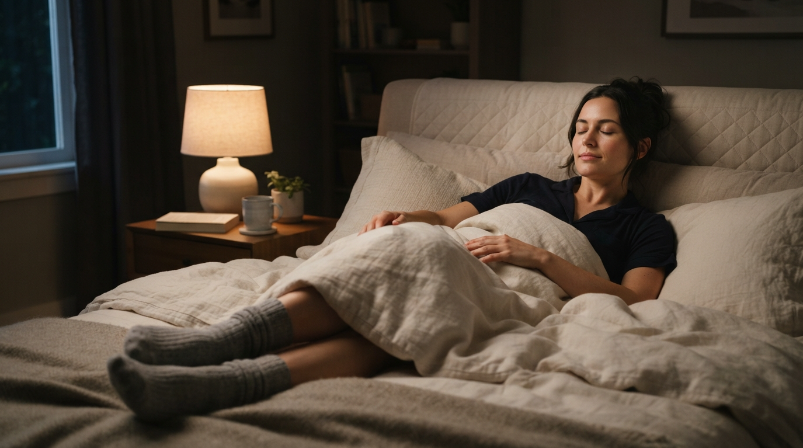
Pulling on a pair of loose cotton socks before climbing under the covers sounds odd, but the physiology is rock solid. Warming your feet dilates distal blood vessels, causing your core body temperature to drop, which is the biological signal for deep sleep.
I noticed I fell asleep roughly fifteen minutes faster once I made this a nightly habit. Using distal vasodilation keeps you from tossing around searching for cool spots on the mattress all night.
7. The Brain Dump Journal Method
Writing down every lingering worry, task, and reminder on a cheap notepad clears working memory before your head hits the pillow. Bedtime rumination happens when your brain fears forgetting unfinished business, keeping your stress hormones elevated.
Keep a simple dollar-store notebook by your bedside and spend three minutes scribbling tomorrow’s obligations. Getting those thoughts onto paper provides cognitive closure, allowing your mind to power down without spiraling over forgotten chores.
8. Strategic Bedroom Window Cracking
Opening your bedroom window just an inch creates passive airflow that lowers room temperature and drops indoor carbon dioxide levels. Cooler ambient air around sixty-five degrees Fahrenheit matches your body’s natural thermal dip during the early stages of rest.
High carbon dioxide buildup in closed bedrooms often causes micro-awakenings and morning grogginess. Improving overnight ventilation costs nothing and helps you stay in deeper sleep stages much longer.
9. The 4-7-8 Breathing Pattern
Inhaling through your nose for four counts, holding for seven, and exhaling slowly for eight resets your autonomic nervous system. This specific cadence forces oxygen deep into your lungs and slows down a pounding heart rate caused by bedtime anxiety.
Practice four cycles of this controlled breathwork while lying flat on your back with your eyes closed. It serves as a natural sedative that interrupts racing internal monologues and puts your body on autopilot for sleep.
10. Dimming Overhead Lights at Sundown
Switching off harsh ceiling fixtures two hours before bedtime and relying on low-wattage floor lamps protects your natural melatonin levels. Bright overhead bulbs mimic afternoon sunlight, which tricks your brain into thinking it needs to remain vigilant and awake.
I replaced my bedside bulb with a warm amber lamp from a thrift shop for three dollars. Creating a low-light environment in the evening ranks high among low cost health tips for people trying to sleep better without buying blue-light blocking gadgets.

11. Left-Side Sleeping for Digestion
Laying on your left side keeps your stomach below your esophagus, preventing acid reflux and easing digestive strain through the night. The natural curve of human anatomy allows waste to move smoothly through the colon in this position.
Placing an ordinary pillow between your knees keeps your hips aligned and takes pressure off your lower spine. Adopting this left lateral posture eliminates late-night heartburn flare-ups that often wake people up choking or coughing.
12. Loose Chamomile Steeping
Brewing a strong cup of bulk chamomile tea thirty minutes before bed binds apigenin antioxidants to specific receptors in your brain. Apigenin creates a mild tranquilizing effect that reduces nervous tension and encourages gentle drowsiness.
Buy loose dried chamomile flowers in bulk rather than prepackaged luxury tea bags to keep the price under pennies per serving. Letting the tea steep under a covered mug traps the calming essential oils for maximum potency.
13. The 20-Minute Out-of-Bed Rule
Leaving your bed if you cannot drift off after twenty minutes breaks the mental link between your mattress and restless frustration. Staying in bed tossing and turning trains your brain to treat the bedroom as a stress zone instead of a resting sanctuary.
Go sit in a dim room and read a physical book until your eyelids get heavy. Enforcing stimulus control therapy protects your bed as a sacred space for sleep, ensuring faster sleep onset over time.
14. The 90-Minute Pre-Bed Shower
Taking a warm shower or bath ninety minutes before bedtime artificially raises your body temperature before triggering a rapid cooling phase. As water evaporates from your warm skin, your blood vessels dilate and dump heat from your core.
This steep decline in core temperature sends a strong biological signal to your hypothalamus that it is time to sleep. Time your evening warm shower an hour and a half before lights out so you hit that cooling curve right as your head touches the pillow.
Frequently Asked Questions
What is the single most effective low cost sleep habit?
Morning sunlight exposure tops the list because it sets your biological clock for the entire day. Stepping outside costs nothing, takes ten minutes, and regulates nighttime melatonin production better than pills. Pair it with a consistent wake-up time, and you will notice a huge improvement within days.
How quickly do budget sleep remedies actually work?
Physical techniques like the 4-7-8 breathing method or cold water splashes work within minutes to calm your nervous system. Circadian adjustments, such as morning light and fixed wake times, typically take four to seven days of consistency before your body naturally falls asleep without effort.
Do I need to buy expensive blue light blocking glasses?
No, you can skip them entirely by using built-in night shift modes on your phone and laptop. Dimming overhead lights and switching to warm, low-wattage side lamps after sunset achieves the exact same biological benefit for zero extra cost. Save your cash for better groceries instead.
Can herbal tea really replace sleep supplements?
Bulk chamomile and valerian root provide potent plant compounds that bind to GABA receptors in your brain, mimicking mild sedatives. While they might not knock you out like prescription drugs, they provide clean, gentle relaxation without morning brain fog or high price tags.
What should I do if I wake up in the middle of the night?
Keep the lights off, avoid checking the clock, and practice slow diaphragmatic breathing while lying still. If you stay wide awake past twenty minutes, get out of bed, sit in a dim room, and read until drowsiness returns so your brain never associates bed with panic.
Conclusion
Fixing your sleep does not require draining your bank account on wellness gadgets or gimmicks. Try picking just two of these simple habits tonight and pay attention to how much lighter you feel tomorrow morning. Which one are you going to test first?